
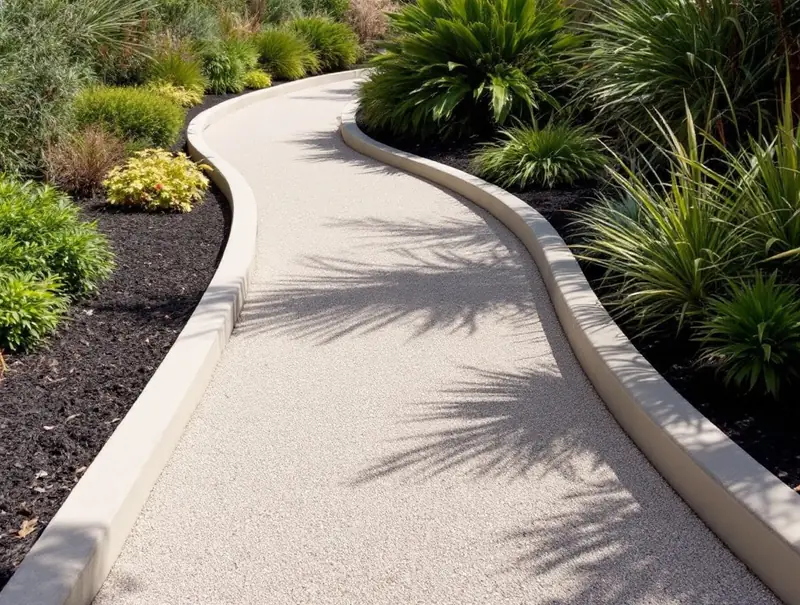
Why edge your garden paths?
Loose-material paths look great when they're first laid, but without a solid edge the gravel slowly spreads into the garden, the lawn creeps in, and the shape of the path disappears. Continuous concrete edging locks the path in place so it looks as neat in five years as it does on day one.
Paths we edge
- Crushed limestone and gravel paths. The most common Perth path, and the one that needs edging most.
- Pebble and river stone paths. Keeps decorative stone contained and tidy.
- Stepping-stone paths. Frames the stones with gravel or mulch between clean kerb lines.
- Side access and utility paths. Neat, low-maintenance edges down the side of the house.
- Paved and concrete paths. A finished edge where the path meets lawn or garden beds.
Tip: Laying a new gravel or limestone path? Kerb it first. The edging sets the shape, then the path material goes in between the kerbs. It's quicker, neater and uses less material.
Straight lines or flowing curves
Because we shape the kerb on site, your path can meander through the garden as easily as it can run straight to the back gate. Both sides of the path can be edged in the same visit, and we can carry the same edging on around garden beds, trees and lawn edges for a consistent look.
Choose a finish
Plain grey is clean and understated. Limestone colour blends into crushed limestone paths, charcoal gives a sharp modern contrast, and stamped or brick look finishes turn the path edge into a feature.