
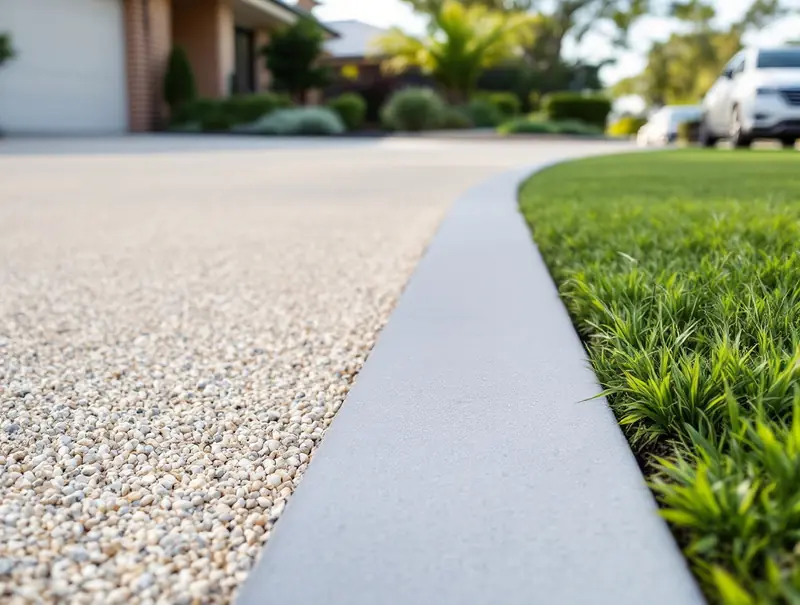
Why kerb your driveway?
The edge of a driveway takes a beating. Gravel and crushed limestone gets kicked into the lawn, tyres chew up the grass edge, and garden beds creep onto the drive. A continuous concrete kerb along the edge fixes all of that in one go, and it makes the whole front yard look planned and cared for.
Where driveway kerbing works best
- Gravel and crushed limestone driveways. Holds the stone in place so it doesn't spread into lawns and beds.
- Between the driveway and lawn. A crisp line that stops grass creeping onto the drive and protects the lawn edge.
- Beside garden beds. Keeps mulch and soil off the driveway, especially after rain and reticulation.
- Along paved driveways. A continuous edge next to pavers or exposed aggregate that tidies up the transition to the garden.
- Turning areas and parking bays. Defines the space so everyone knows where to park.
Good to know: Driveway kerbs sit along the edge of the driveway, not in the wheel path. They handle the odd tyre brushing past, but they aren't designed to be driven over regularly. We'll recommend the right position and profile when we measure up.
Styles that suit the front of your home
Because the driveway kerb is one of the first things people see, it's a good place for a finish that matches your home. Plain grey suits most homes. Coloured kerbing in charcoal or sandstone can tie in with your roof or render, and brick look kerbing pairs nicely with brick-paved driveways.
Verges and crossovers
Kerbing along the verge or crossover can finish off the street frontage. Verge work may need approval from your local council, so it's worth checking with your council first. We're happy to talk through what's possible.