
Angle and square kerb: the residential garden profiles
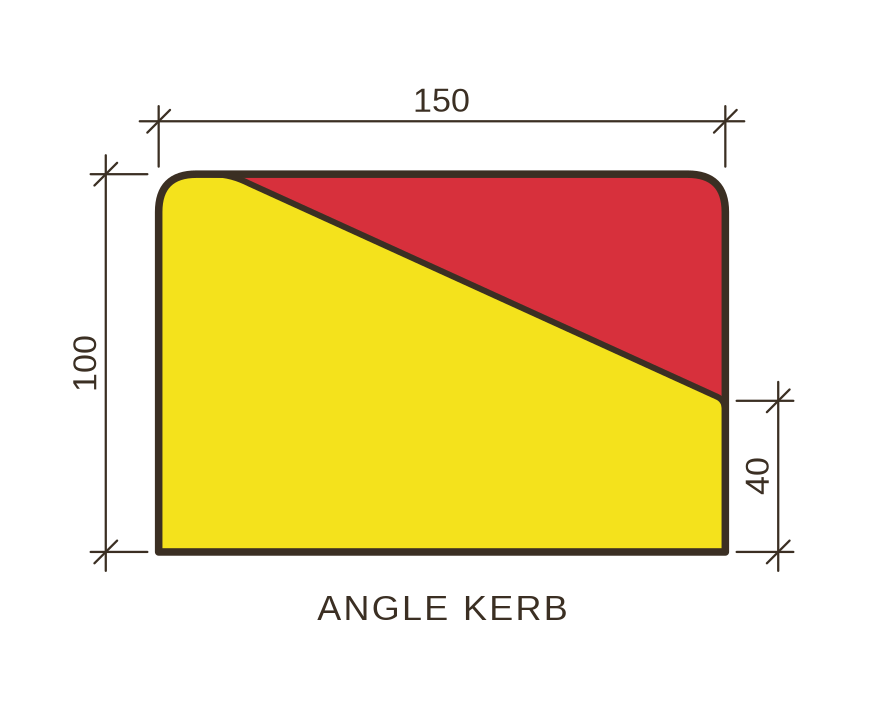
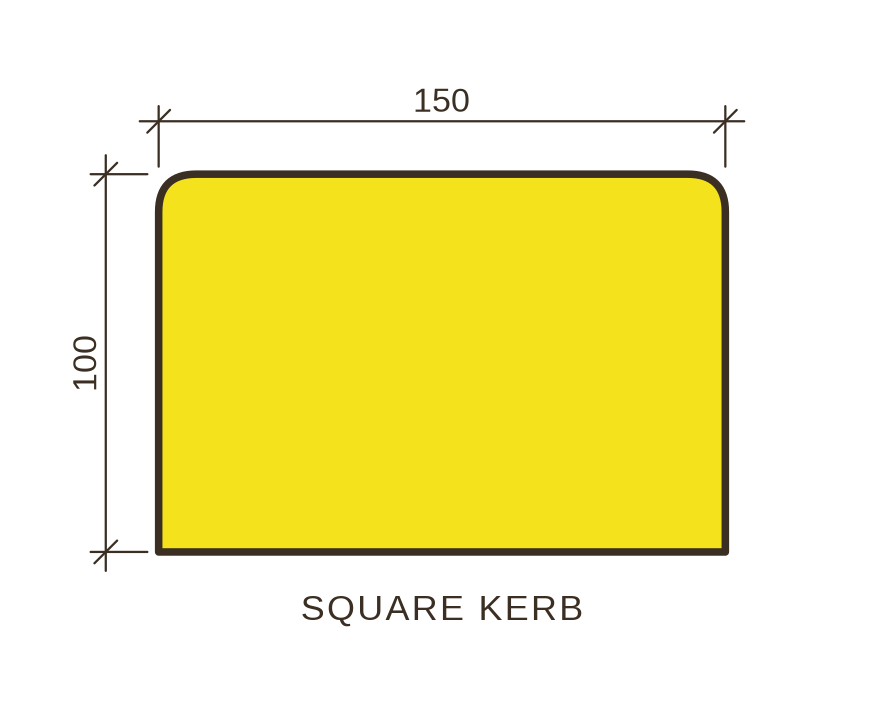
Most home gardens in Perth use one of two profiles. An angle kerb has a face that slopes rather than sitting vertical, giving a softer line that's a little more forgiving if you brush past it with a mower or wheelbarrow. A square kerb keeps a crisp, vertical face for a cleaner, more defined edge. Both do exactly the same job: a continuous, one-piece border between lawn, garden bed, paving or driveway, with no joints for weeds to push through.
Which one suits your garden usually comes down to look rather than function; we'll bring samples to your free on-site quote so you can see both next to your home.
Wheel block and lay-back kerb: commercial car park profiles
On commercial sites, such as car parks, we use two profiles built to block and limit where cars park, around islands, bays and medians. They're also used around play equipment, where a low, rounded border suits the site.
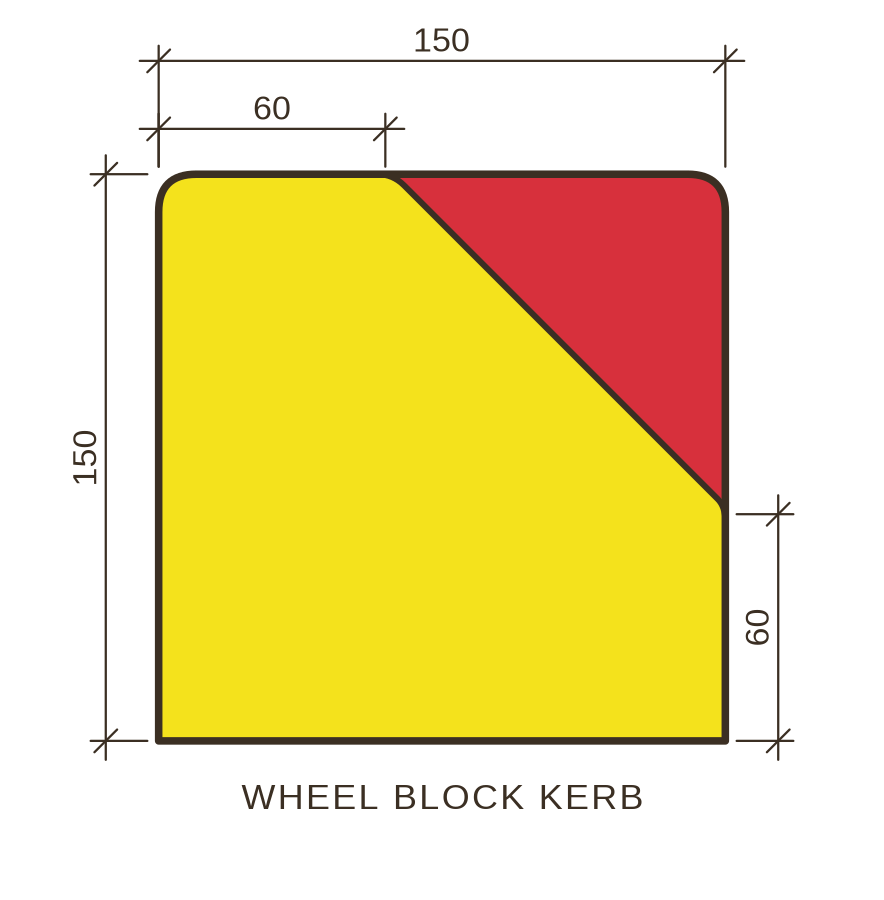
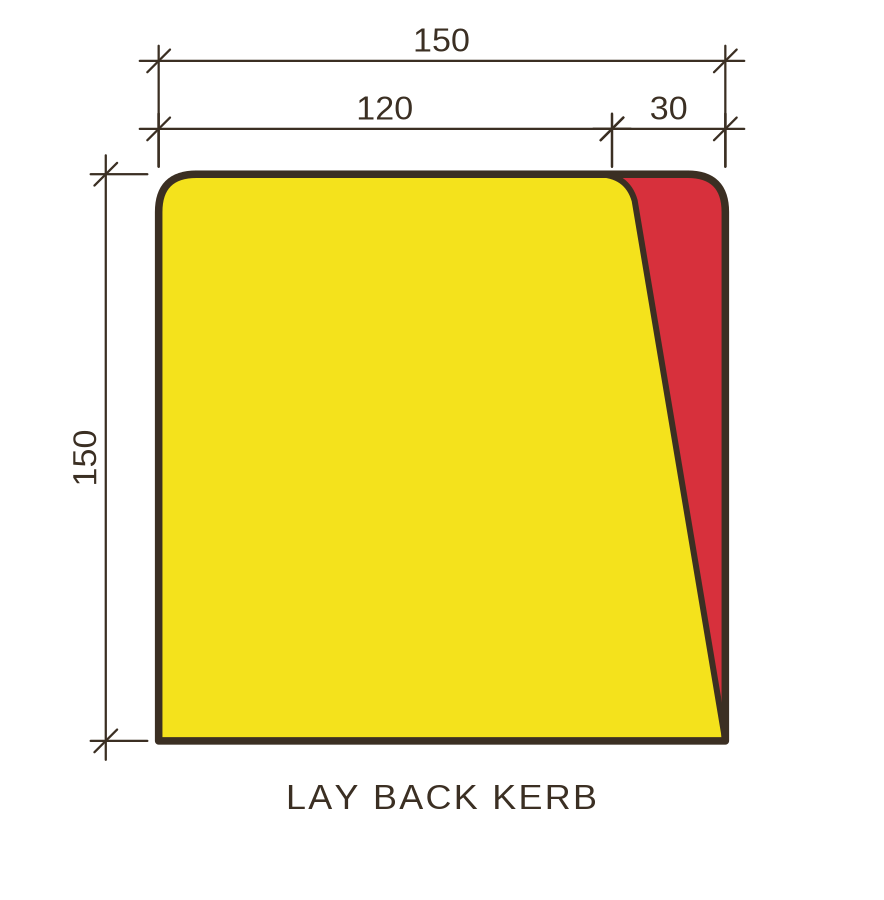
A wheel block kerb has a stepped, lower profile that blocks and limits cars on a car park while staying tidier and less obtrusive than a standard garden kerb. A lay-back kerb goes a step further with a full ramped face and no lip at all, which also suits soft-fall borders around play equipment where a hard edge isn't wanted.
Good to know: these are commercial kerbs built to block and limit cars on a car park, and they take the odd bump without complaint, but they're not built for routine, heavy traffic the way kerb and channel on a driving lane is - that's civil work to a different specification, and not something we install.
Which profile is right for your job?
| Profile | Shape | Best suited to |
|---|---|---|
| Angle kerb | Sloped face | Residential gardens, driveways and paths |
| Square kerb | Vertical face | Residential gardens wanting a crisp, defined line |
| Wheel block kerb | Stepped, low profile | Commercial car parks - blocking and limiting where cars park |
| Lay-back kerb | Full ramp, no lip | Commercial car parks and soft-fall play area edges |
Not sure which one fits your site? Get in touch and we'll talk it through, or see kerbing styles & colours for the finishes we pair with each profile.